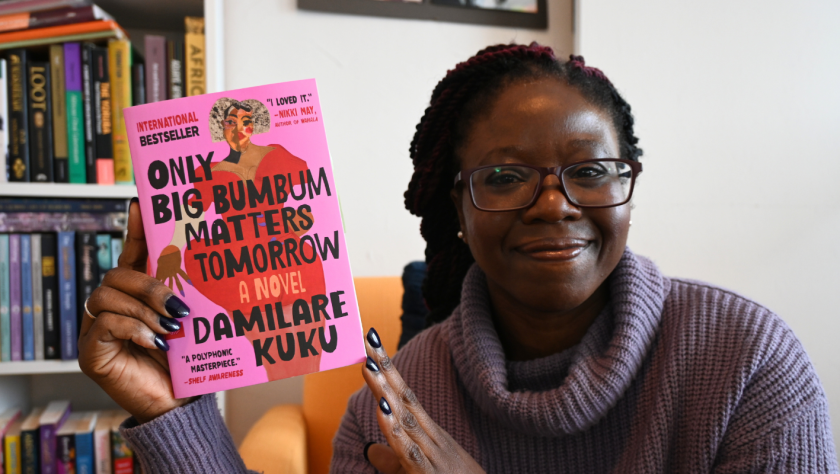
Video review: Only Big Big Bum Matters Tomorrow by Damilare Kuku
20-year-old Témì is convinced a Brazilian butt lift is the answer to all her problems.
20-year-old Témì is convinced a Brazilian butt lift is the answer to all her problems.
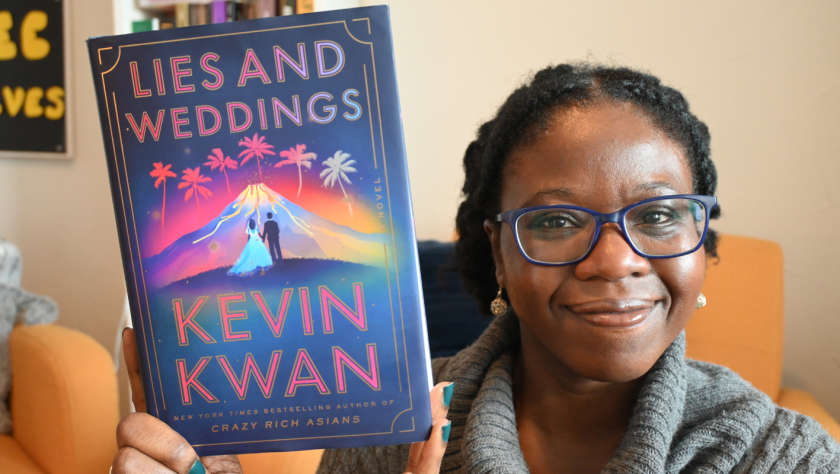
After years of reckless spending the aristocratic Gresham family are facing bankruptcy. Rufus, a young, handsome future earl, is forced to choose between marrying for money or defying his mother and following his heart.

It is a satirical exploration of the practice of lynching that helped to uphold white supremacy in the US from slavery to the present day.

For me, this dazzling novel was about the children of colonialism and the search for belonging.

When Dr. Georgia Young realizes she’s stuck in ‘cruise’ mode with no target destination, she slams on the breaks and calls a time out to re-evaluate her life and the choices that have led her to it. Her daughters, ex-husbands, mother, colleague and best friends worry that she’s lost her mind, but Georgia is over prioritizing the opinions of others above her own. She commits to overhauling her life and being intentional about making choices that revitalize and feed her spirit. The death of a university crush also inspires her to seek out all men she has loved over the years with the goal of letting them know that they mattered. Terry McMillan’s 2016 novel is a story of reinvention and second chances and it challenges all of us to consider whether we are living our most optimal life or simply going through the motions.
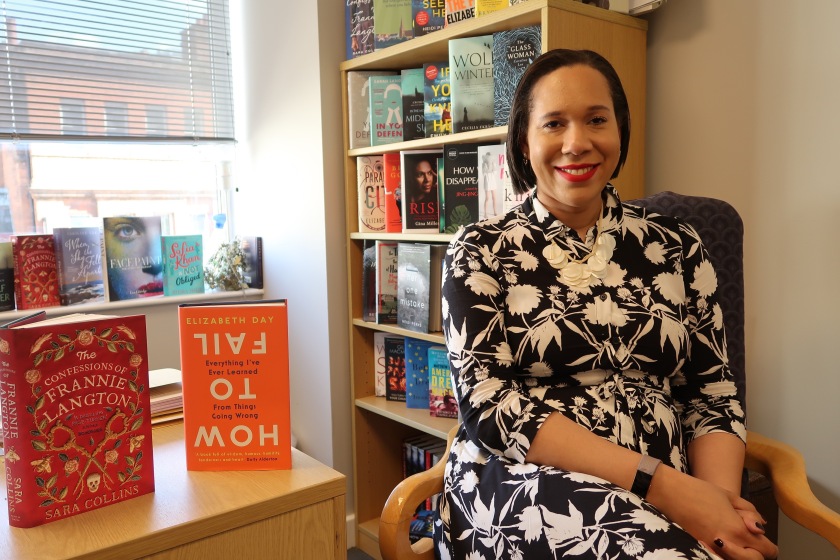
“I love the deal. I LOVE the deal. I mean to be an agent you have to love the deal. I love sending out a book and getting those emails 24 hours later saying ‘I loved it! Don’t let someone else buy it.” It’s a sunny Tuesday morning and I’m chatting with literary agent Nelle Andrew in a coffee shop in Bloomsbury. We are opposite the offices of Peters, Fraser and Dunlop where she works as a primary agent, a ‘hunter-gatherer’ as she puts it, searching out and representing the UK’s brightest writing talent.

Last year I visited Elmina Castle, a slave fortress on the coast of Ghana. It’s a beautiful white-washed building, very similar in style to Cape Coast Castle, the slave fortress where Yaa Gyasi sets key pieces of action in Homegoing. The castles are two of about 40 such structures that were built along the Ghanaian coastline by Europeans. They were trading posts that became holding prisons for millions of West African slaves who were then shipped off to the Caribbean, the US and South America. The structures are huge. They dominate the coastline. Markets and towns would have grown up around them, like the town of Elmina that sprouted up around Elmina castle. It is impossible that the locals did not know what the primary trade from these castles was. Did it trouble them? Why was the trade in African bodies accepted? Gyasi takes us aside, sits us down, and says, ‘let me a paint you a picture, let me show you how the system worked.’

A young man is gunned down in Nairobi. His murder uncovers buried family secrets and the truths ripple back through the generations that have formed post-colonial Kenya. Incredible novel by Yvonne Adhiambo Owuor.

I was in primary school when I first read Mildred D Taylor’s Roll of Thunder, Hear My Cry. Cassie Logan was my hero. Dark skinned, kinky haired, bold and outspoken. However, her life with her three siblings, school-teacher mother, farmer father and Big Ma was something I did not envy, mired as it was by extreme poverty and violent, overt racism. It seemed a world away from my quiet life in South East London. I’ve read the novel many times since then. It has never felt dated or clichéd or simplistic. It is one of those remarkable books that will meet you whenever you are. As a child in the 1980s, I connected with the simple story– the protagonist overcoming a monster. I rooted for the family facing down the menace of racism. But it was very much like reading a fantasy novel, the spitting, clawing racism of Cassie’s world bore no resemblance to my reality. Her world was 1930s rural Mississippi, Mississippi Burning, Mississippi Goddam, as Nina Simone cursed it. It was lynchings, burning …

When Margaret Busby launched her publishing company in 1967, she was the youngest and first black woman to do so in England. Decades later, when she was asked why she’d fought so hard to launch an indie publishing house, she said: “So that you don’t only get one perspective all the time, with everything filtered through the usual gatekeepers— we know who they are, whether in London, New York or wherever… Other voices need to get a look-in, not just those that already have the power.” Trinidad and Tobago Guardian
 Coffee Bookshelves