Latest Posts

2014 Black Reading Challenge

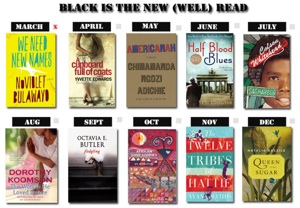
There’s nothing like a reading challenge to get your creative juices running. Maybe you have a list of authors you’ve been longing to try, or you’d like to discover some new voices. You don’t need a reason to take part in the 2014 Black Reading Challenge, just a library and the ability to read.

Don’t adjust your set, I have 10 brilliant books to brighten your year.

Plus, there’s a downloadable, printable version of the 2014 Black Reading Challenge. Pin it on a wall, stick it in your notebook, do whatever you want, but get reading!

Well read download

*

March

We Need New Names – NoViolet Bulawayo

This debut novel centres around 10-year-old Darling, a girl growing up amidst the political decay and social devastation of Zimbabwe. Darling gets the chance to live with her aunt in America but discovers that along with new opportunities comes a deep longing for home. A brilliant novel that’s been nominated for every award going.

*

April

A Cupboard Full of Coats – Yvette Edwards

When an old friend turns up at Jinx’s East London home, memories she has long buried come thundering back and she’s forced to confront the tragic events that caused her mother’s death. Though the novel takes place over a single weekend, largely between two characters and in a handful of settings, it manages to traverse decades and encompass universal themes around love, envy and destiny. Be warned: the descriptions of lush Caribbean food are vivid enough to cause heartburn.

A Cupboard Full of Coats by Yvette Edwards

*

May

Americanah – Chimamanda Ngozi Adichie

Ifemelu and Obinze are in love, but Nigeria in the 90’s is not a place where the poor and unconnected thrive, no matter how book-smart. And so they move west, to England and the US, where they discover what ‘black’ and ‘African’ mean beyond the boundaries of home. It’s a book as insightful and funny as anything Adichie has ever written, and for anyone who’s ever been a migrant it resonates again and again.

Americanah by Chimamanda Ngozi Adichie

*

June

Half Blood Blues – Esi Edugyan

A black musician disappears in 1930s Germany and leaves behind an enduring legacy and a towering mystery. It’s no wonder the Canadian author scooped up a slew of awards for this work. She recreates the stifling menace of Nazi-Germany, slips into the minds of three young men and weaves around them a powerful story of jazz, brotherhood and shame.

Half Blood Blues by Esi Edugyan

*

July

Sag Harbour – Colson Whitehead

Take the kid from Everybody Hates Chris – sweet, articulate, perpetually narrating and analyzing – give him Cosby-rich parents and dump him in the Black Hamptons (otherwise known as Sag Harbour). Voila! You have Whitehead’s 2009 novel. It’s a clever, funny and nostalgic coming-of-age story set in a country that fears young black men.

Sag Harbor by Colson Whitehead

*

August

The Woman He Loved Before Me – Dorothy Koomson

Libby has a gorgeous husband, a beautiful house and the perfect life. Until she stumbles on some diaries and begins to wonder what happened to her husband’s first wife. Prepare to be shocked, shocked and then shocked some more. There are more twists in this book than a salt shaker and Koomson leaves no emotion unplucked. Perfect beach read.

The Woman He Loved Before Me by Dorothy Koomson

*

September

Fledgling – Octavia Butler

Dial down your prejudice button, yes this is fantasy, yes there are vampires, but this is like nothing you’ve ever read before. Shori is a young vampire with amnesia and a killer is hot on her trail. As we learn more about her past life we discover a hierarchal society based on the African village but divided along colour lines. It’s fantastic, thought-provoking and did I mention, it’s like nothing you’ve ever read before?
Warning: the story contains references to paedophilia.

Fledgling by Octavia Butler

*

October

African Love Stories – Edited by Ama Ata Aidoo

We don’t hear enough about love in Africa. What we hear about is death, disease and disaster. This collection of love stories spans the African continent from Sudan to Kenya to Zimbabwe and features a steller line-up of authors including Sefi Atta, Helen Oyeyemi and Chimamanda Adichie. There’s every reason to read this anthology and not a single reason not to.

African Love Stories by Ama Ata Aidoo

*

November

12 Tribes of Hattie – Ayana Mathis

A family moves north during the Great Migration, but the dreams and aspirations that drove them from the Jim Crow south are soon replaced by equally bitter experiences. Mathis’ writing is astoundingly rich, and though this collection of stories is dripping with sorrow, there’s literary joy in every line.

The Twelve Tribes of Hattie by Ayana Mathis

*

December

Queen Sugar – Natalie Baszile

Single mother Charley inherits a Louisiana sugarcane farm and decides to abandon her city life in LA for the challenges of farming life. It’s a heart-warming story about family, female empowerment and reinvention. Perfect for the holidays.

Queen Sugar by Natalie Baszile


Print off the 2014 Black Reading Challenge and check off the books as you read.

Melancholy and magnificent: The Twelve Tribes of Hattie

AyanaMathis I found I couldn’t read The Twelve Tribes of Hattie as a straight shot. The narrative was so relentlessly bleak I had to take the odd break to remind myself that joy exists in the world. But I returned to the novel eagerly each time, partly because the story is compelling, but largely because the writing is flawlessly beautiful.

We first meet Hattie, the title character, at 17-years-old. She’s holed up in the bathroom of her rented house, fighting to save her twin babies from pneumonia.

The children, Philadelphia and Jubilee, have been named to reflect Hattie’s hopes for life in the north. She “wanted to give her babies names that weren’t chiseled on a headstone in the family plots in Georgia, so she gave them names of promise and hope, reaching forward names, not looking back ones.” When the babies die, Hattie’s optimism leaves with them.

Her grief is compounded by disappointment in her husband. He turns out to be a self-defeating man who drinks his pay cheques and sleeps around with women who “didn’t mean anything. They just made his life a little more livable from one day to the next.” His behaviour traps his wife and children in a cycle of poverty: “Hattie could almost hear them growing, their wrists lengthening and poking out beyond the cuffs of their sleeves, their feet outgrowing their shoes, their shoulders widening and pulling the fabric of their coats taut.”

While Hattie’s marriage sours, the children keep on coming. Eleven in total. Though Hattie loves her children fiercely and cares for them in every practical way,  her misery makes her cold and her bitterness infects her offspring. Each chapter delves into the life of another child. And in each we discover a new form of unhappiness.

Mathis’ writing is rich, lyrical, confident and transporting. Yet it never gets in the way of the story. Her characters are well developed, her story is perfectly-paced and her canvass is vast. There are simply no faults to find. Apart from all that gloom.

Beyonce

Beyoncé quotes Chimamanda Ngozi Adichie on new album

Beyonce Flawless

Beyoncé’s new self-titled album has succeeded in surprising the world not only in its unexpected appearance, but also in the choice of collaborators. Specifically the inclusion of excerpts from the speech, We Should All Be Feminists, by author Chimamanda Ngozi Adichie.

When you look at the two artists there are certain similarities: they’re both female, black, and outstripping the competition in their respective fields. It’s not surprising that one would choose to reference the other in a creative piece.

And yet I was surprised. Not only that Beyoncé had heard of my favourite author – I imagined that between the stage shows, studio sessions, video shoots, press interviews, film sets, product endorsements, high-end shopping and mothering a toddler, Queen Bey wouldn’t have time to read literature – but more that she’d chosen to include a feminist speech from Chimamanda.

Chimamanda Adichie wears her feminism plainly on her sleeve and is always waving the flag for equality of the sexes.

Beyoncé’s stance on feminism has been less clear, even to herself. When asked if she considered herself a feminist, she said: “That word can be very extreme… But I guess I am a modern-day feminist. I do believe in equality. Why do you have to choose what type of woman you are?”

There’s no better way to ignite a debate among feminists than to mention Beyoncé’s name. Do her daring costumes mean she’s owning her sexuality or that she’s commodified and sold it for success in a sexist industry? Are the feminist nay-sayers prudish and sex-negative? Or does she look like a Hooters girl who’s well recompensed? Should we all stop criticizing Hooters girls? Furthermore, should we stop being so academic and reflective and simply yell GURL POWERRRR like we did in the 90s?

There are no obvious answers. But by allying herself with Chimamanda, Beyoncé does seem to be nailing her feminist colours to the mast. Meanwhile, the comments section under the Chimamanda TEDx video looks increasingly like a BeyHive message board as a slew of young people discover the author for the first time. I think this counts as a win for all sides.

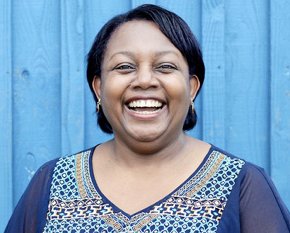
Malorie Blackman laughs at the camera

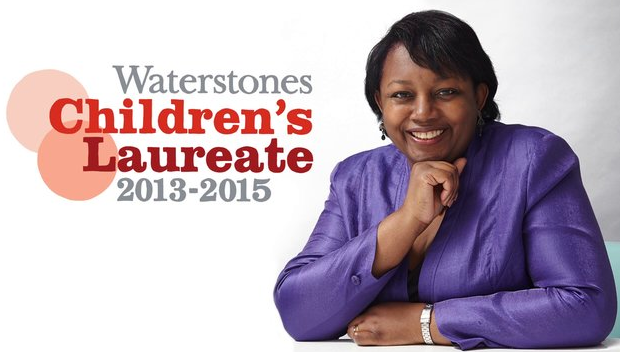
10 things you never knew about rock star author Malorie Blackman

Malorie BlackmanMalorie Blackman has written over  60 books, was appointed Rock Star of All Things Bookish – ie Children’s Laureate – in June 2013, and has now added a little icing to all that cake by being named the most influential black person in Britain. 

Pour yourself a cuppa, get comfortable in that chair and let’s learn a little more about this literary powerhouse.

One: She was first published by The Women’s Press

It took two years and a staggering 82 rejections before Malorie got her first book deal. It was with the feminist publisher, The Women’s Press and she submitted a collection of short stories for teenagers that blended horror and science fiction. The collection was published in 1990 and called Not So Stupid. Alas, the same can’t be said about all those publishers who originally passed on her.

Two: She read her first black book at 23

Malorie has said that it never crossed her mind to be a writer until her mid-20s when she read The Colour Purple. The Alice Walker novel was the first book she’d read that exclusively featured black characters and after reading it she realised black people could be authors too.

Three: She went to grammar school

Malorie attended Honor Oak Grammar School in Peckham, south east London. As the child of immigrant parents, her success in the UK literary establishment could be used as proof that grammar schools grease the wheels of social mobility. However, Malorie’s descriptions of demoralizing teachers who quashed her then dreams of working in education by informing her that black people didn’t teach, suggest she succeeded despite the system.

Four: She’s hosting the UK’s first YA convention

Malorie believes previous Children’s Laureates have focused on serving young children, she plans to use her appointment to encourage a love of literature among teenagers. To this end she’ll be hosting the first UK Young Adult Literature Convention in June 2014.

Five: Noughts and Crosses was inspired by Stephen Lawrence

After the racist murder of black British teenager Stephen Lawrence in 1993, Malorie decided to make racism the central theme in her next book. She wanted to explore slavery and its legacy in a unique way and so created a dystopian alternative universe where the black Crosses have power and status and the white Noughts are oppressed.

Six: It was a battle to get Noughts and Crosses published in the US

9/11 killed off the possibility of publishing any book explaining why someone might become a terrorist. It is now available in the States under the title, Black and White.

Seven: She’s a book hoarder

In 2009 Malorie admitted to owning well over 15,000 books. We can only imagine what the current count is.

Eight: She’s written a novel in verse

Malorie has said that she loves children’s writing because she can explore many different topics in many different ways. Her novel Cloud Busting is the perfect example. It’s written in narrative verse, aimed at children 8+ and explores an unlikely friendship between two very different boys

Nine: She used to be a systems programmer

Before becoming a fulltime writer Malorie’s precious jobs included: work in BHS and Littlewoods as a Saturday Girl, receptionist and catering assistant roles, and – after earning a HNC in computing, jobs as a Systems Programmer and Software Specialist.

Ten: She’s written for PJ and Duncan

Malorie graduated from the National Film and Television School and has written episodes of the children’s drama Byker Grove, adaptations for her books Whizziwig and Pig-Heart boy.

Black Book Swap

The third Black Book Swap was held at the Brixton Ritz on June 15. You can read all about it on Black Book News.

Read More

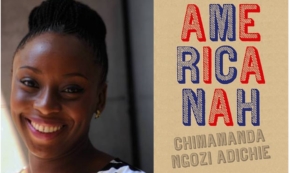
Americanah by Chimamanda Ngozi Adichie

Chimamanda Ngozi Adichie

Americanah opens with a hair salon and a major turning point. Ifemelu has decided to close her hugely successful blog, break up with her Black American boyfriend, sell her apartment and (after 13 years away) return to Nigeria.

She tells herself there’s no specific cause for the move, just “layer after layer of discontent that settled in her, and formed a mass that now propelled her”. But while she sits in the hairdressers having her hair braided for this monumental trip home, she thinks of the Obinze, “her first love, her first lover, the only person with whom she had never felt the need to explain herself”, and it’s clear part of her homesickness is the longing to see her former flame. Impulsively she fires off an email to Obinze informing him of her return.

Cut to Obinze who receives her email as he sits in Lagos traffic. From his reaction we know the feelings are mutual, which is complicated since he is now a husband and father.

Amidst the turmoil Ifemelu and Obinze fall in love and are then forced apart, Ife to America, Obinze to England.

The story then leaps back to their youth plunging us into 80s Nigeria where the economy is faltering, the education system disintegrating and the only way to get ahead is to be rich and connected or to leave. Amidst the turmoil Ifemelu and Obinze fall in love and are then forced apart, Ife to America, Obinze to England. The tale then zips back and forth in geography and time until wending its way back to Nigeria for the dénouement.

There are no perfectly moral characters in Americanah (though Obinze comes pretty darn close), but the cast are fully-formed, sympathetic and fascinating people. Particularly Ifemelu. She’s a bright, bold and inquisitive woman whose experiences form a natural vehicle for exploring BIG ISSUES without lecturing. “When you make the choice to come to America, you become Black,” she opines in her blog Raceteenth, “Stop saying I’m Jamaican or I’m Ghanaian. America doesn’t care.” Much of her musings are on the issue of race, it’s a revelation for someone who’s never experienced it as an obstacle before. Placing her in the US during Obama’s first campaign for presidency is very cleverly timed considering all the soul-searching the election prompted.

Chimamanda’s writing is as insightful as ever. She ploughs exuberantly into some heavy themes (class, cultural identity, African/American/West Indian discord) and though this adds a density to the book, for the most part the strong narrative and compelling characters keep the train firmly on the tracks.

Ultimately Americanah is a love story, an epic tale of boy-meets-girl and then…

Jaipur Literature Festival 2013

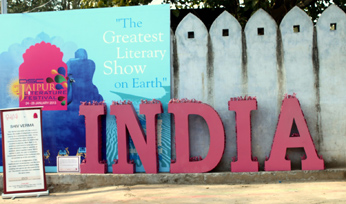
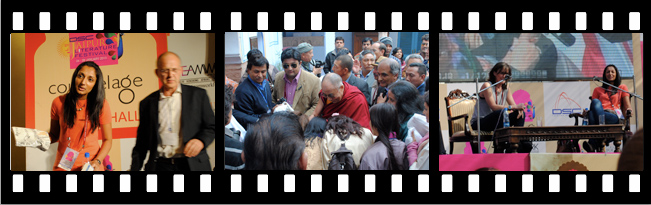
Jaipur-strip-of-threeI’m late for the start of the Jaipur Literature Festival. I’m trying to decide between jeans and a light summer dress for the Indian winter sun when I get a call on my hotel room phone.

“Are you still coming?” asks a member of my book club, “we were supposed to leave at 9.30am.” It’s 9.50am and the other 11 members of the Asian Authors Book Club have been waiting on the mini bus for 20 minutes. I throw on the summer dress.

Luckily traffic moves quickly through Jaipur’s roads and the Diggi Palace venue turns out to be a short 15 minute ride away. We hustle through the huddles of khaki-dressed police – loaned to the festival after the latest round of Salman Rushdie-related death threats – through the metal barriers that seem to assessorize every Indian tourist venue and are finally tumbled into the heart of the festival.

There is colour everywhere. This is India so that goes without saying, but the festival organisers have branded Jaipur 2013 in a hot pink and it adorns boards, literature and staff uniforms. The pink is accentuated by blue and yellow balloons, bunting, natural foliage, an intensely blue outdoor pool and the various colours of sponsor names.

The grounds of the palace have been sectioned off into three seated, open-air areas of differing sizes, a large tent and an indoor hall.

Because this is India things don’t start quite on time. In fact we have enough time to get itineraries, pay 100 rupees for the festival booklet and use the toilets before the keynote speech begins. It’s delivered in strong tones by writer and social activist Mahasweta Devi and centres on freedom and gender equality.

I have Zoe Heller’s talk circled next on my timetable. It’s a prickly discussion. Journalist Monisha Rajesh opens by describing Heller’s characters as universally unpleasant, which Heller takes exception to. The conversation never quite warms up after this.

During the transition from one talk to the next I catch a glimpse of the Dalai Lama and make friends with a Jaipur local called Anna. Anna is 24, newly married – a love match, she hastens to tell me – and has taken a year long sabbatical from her job to acclimatise to her new matrimonial status. Together we sit in on ‘Down the Line’, a lively chat about India, Italy and train travel with Monisha Rajesh and Tim Parks. Both read excerpts from their new books on the topic, Rajesh’s ‘Around India in 80 Trains’ and Parks’ ‘Teach Us To Sit Still’.

Anna insists I learn a little about Indian politics by attending the Shashi Tharoor talk next. It’s held in the largest outdoor area and it’s standing room only. Tharoor is a film-star-handsome politician who (it turns out) was fired from a lofty cabinet position after awarding a public contract to his girlfriend. When confronted about it he denied knowing her, then walked her down the aisle. Apparently that’s all scandal under the bridge now and he’s back in the bosom of the establishment. Tharoor is brilliantly witty, fantastically intelligent and can talk comfortably about anything. The 90 minutes fly and I feel like I’ve had a solid grounding in Indian/Pakistani relations by the end of it.

There are so many exciting talks, and so much to see. The whole thing is so wonderfully exhausting I don’t make it to the Man Booker International Prize event at 6pm where I know the 2013 finalists will be announced. But you can find the contenders here.

Jaipur Literature Festival

There are no easy options for the Geezer Girls

Geezer GirlsFrankie Sullivan is one of the most ruthless Geezers in London’s deadly underworld. When the women he employs to traffic diamonds refuse an order he arranges their murder and shifts his nefarious attentions to their daughters.

In a world where money talks and even arrows are crooked, fifteen-year-old Jade Flynn and three other girls are dumped in the St. Nicholas care home for children and forced to participate in Frankie’s illegal ‘special community projects.’ It takes a tragedy to lend them the courage to run.

For 10 years they stay hidden. But now The Geezer has found them and he is royally pissed. Still, he might let them live if they do one last job…

The Good

The drama launches like a bullet from a gun and rockets along for all 435 pages. Jade and her fellow musketeers spend most of those pages battling for their lives and I admit I had to put the book down a number of times while I mustered the strength to endure their latest disaster.

There is a real sense of menace from the villains. Frankie is a heartless godfather figure, ruthlessly ambitious, manipulative, his penchant for violence tempered only by clear-eyed cunning. Mitchell cleverly counterpoints him with a raft of mindless thugs, the foot soldiers who wreck havoc in the lives of our heroines.

Life in London’s underworld is so sharply observed and so seemingly authentic you can’t help but wonder about the life of this former primary school teacher (Mitchell). Her plotting is also masterful. There’s an excellent twist towards the end you just won’t see coming and the narrative is always plausible – bar the odd occasion when you wonder why the girls don’t just go to the police and turn themselves in.

The Bad

It’s hard to empathise with characters when you’re grinding your teeth at their naiveté. The men in Geezer Girls are deadly and decisive, their back up plans have back up plans. The four women at the centre of the story are frustratingly passive. Frankie promises the girls that if they behave and follow orders their mothers will be safe so they fall over themselves to comply (until his promise is proved false). Ten years later he promises them freedom after one last job and again, having apparently learned nothing in the intervening time, they guilelessly follow the dotted lines. No matter how he abuses and deceives them, the four friends cannot conceive of a solution independent of him.

Maybe this is the reality of London’s underworld, maybe it’s because I’m such a fan of strong-willed females like Buffy and Steig Larsson’s Lisbeth, but Geezer Girls feels like a throwback to the 80s, when men kicked ass and women screamed and ran.

Conclusion

If the female characters were stronger the novel would be shorter. Which would be a shame as it’s really very good. So suspend your disbelief, suppress your inner feminist and enjoy a rollicking story.

Chibundu Onuzo talks love in The Spider King’s Daughter

“She doesn’t treat anyone like an equal. That’s the way she’s been brought up. She’s like her father; but she still manages to have moments of kindness.”

Chibundu Onuzo is defending the protagonist in her debut novel, The Spider King’s Daughter. She sits opposite me in an airy delicatessen in London Bridge, a fork dancing in her hand, her youthful face animated. She’s supposed to be eating a plate of mushroom pasta, but after I suggest her story of friendship across Nigeria’s economic lines cannot really be a friendship when the rich man’s daughter, Abike, insists on referring to the book’s other central character as The Hawker, denying him an identity beyond his poverty, Chibundu launches an earnest defence.

“She was raised in a very unhappy home. I applaud Abike for all her humanity,” she insists.

Chibundu is softly spoken and self-effacing. There can’t be many 21-year-old university students who find themselves juggling essay deadlines with promotion for a published novel, and there are certainly no others who can claim to be the youngest female writer ever signed by the venerated publishing house, Faber and Faber.

“Theoretically there’s more than enough time,” Chibundu, whose name means God is life, says with a wry smile, “There are 24 hours in a day. If I was a good, organised person, I could do everything and even take up hockey or something.”

It is a typical response from the young author, a mild self-depreciation used to counter any suggestion that her achievements are extraordinary. I’m not convinced. After all it must take a certain amount of focus and a prodigious amount of talent to secure an agent on the strength of three chapters then land yourself a two-book deal at 19. The subsequent two years of manuscript revisions were done alongside a history degree at King’s College, and now, in her final year she’s simultaneously working on her sophomore novel.

When does she find time to write, I wonder. “My days are upside down,” she admits, “I can write until 5am. Obviously that doesn’t work when I have lectures but you don’t get the same quality of silence during the day. At 2am it’s like you’re the only person in the world.”

Despite her amiable demeanour I imagine it must have taken some tenacious persuasion for her parents to agree to her history degree, a subject usually considered about as useful as horse husbandry by Nigerian parents.

She laughs, a hearty sound that peppers our conversation, and nods in agreement. “Luckily for me I’m the youngest, they were just like,” she switches from her lightly accented English to a heavier Nigerian vernacular, “…go to university, get a degree and hurry up. We don’t care what you do, you can do nail cutting studies. Just go to school and come out and let us go into our retirement.”

With her older siblings already working in law, finance and engineering, her parents, both doctors, probably decided three out of four was good enough.

The Spider King's Daughter

They likely also noted their youngest child’s ambitious streak – “I started my first novel when I was 10. I wrote 70 pages. When I was 14 I tried a short story collection.” – and realised it wouldn’t matter what she studied. After all, successful author is just another objective on a long list. Ultimately she’d like to work in politics or social development: “I haven’t decided if it would be more effective to work outside government…” not to mention the singing interest she’d also like to explore along the way.

Chibundu first came to Britain to attend a private boarding school at 14, a familiar trajectory for the children of Nigeria’s upper classes. I ask about the issue of class and wealth in Nigeria, a theme that underpins her novel.

Her seventeen-year-old creation Abike lives in a sprawling mansion, the favourite child of wealthy businessman, Mr Johnson, a man with his hands in every pie, (hence the title). On the opposite end of the spectrum is the young street hawker who one day sells Abike an ice cream, and changes the path of both their lives. Would these two really meet? Could they have a relationship in Lagos, a city where the gap between rich and poor is a yawning chasm?

“Yes!” Chibundu is adamant, her hands emphasising points as she talks. “In Nigeria we talk to each other more. Strangers strike up conversations.” She refers to an incident described by author Colin Grant at the Black Book Swap, an anecdote about a colleague at the BBC who doesn’t see or acknowledge the staff that clean their offices. “In Nigeria that wouldn’t happen, the cleaner would say, ‘Good morning Oga,’ he’d ask, ‘How is the family?’ there’d be that interaction.” She goes further arguing Nigeria doesn’t have a class system at all. “We call them levels. The levels are fluid, you can always move up or down.”

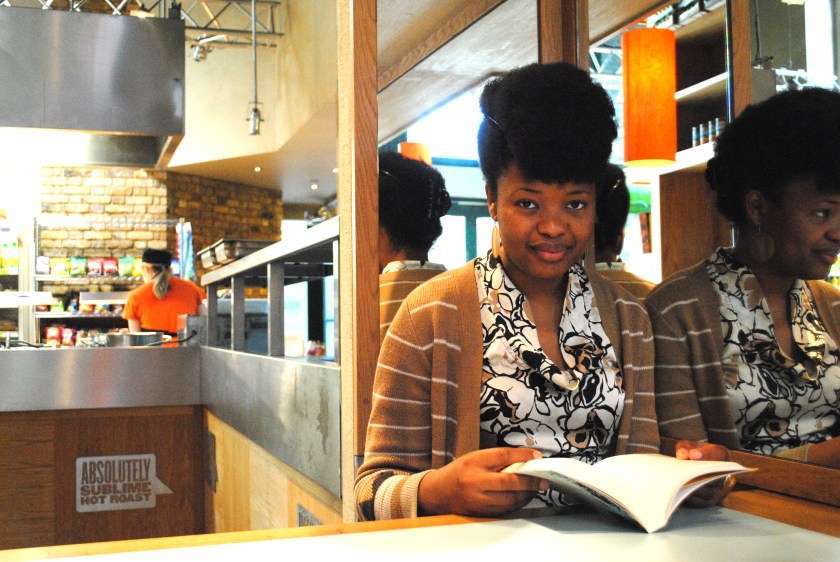
The delicatessen has grown steadily busier around us and I pull out my final questions. I admire her hair and wonder at the reaction in Nigeria, a country that only seems to appreciate the afro on black Americans. She laughs again, “people think it’s a wig,” she says bemused, “they forget this is the way God made our hair.”

What about identity? “I never thought of myself as black until I came to the UK. In Nigeria we use tribe to differentiate – to create artificial differentiations I think. I don’t mind being a black author; I’m black, I’m Nigerian. It’s in the nature of people to look for ways to classify.”

Her favourite childhood books? Interestingly she grew up with the same pool of imported Western classics as Nigerian children growing up in the 60s and 70s -The Famous Five, Mallory Towers and later Jane Eyre, Wuthering Heights, David Copperfield and The Count of Monte Cristo.

Her eyes light up when she mentions Chinua Achebe’s Things Fall Apart, though she was only inspired to read it once she’d moved to Britain. “I just had this thought in my mind that Nigerian fiction would be very dull. I read it in one sitting. And I thought, ‘this book is amazing, I’ve been missing out.’” From there she discovered Chimamanda Ngozi Adichie and Sefi Atta.

“I met Chimamanda  – she was very nice,” she says in that endearing, off-hand way that I imagine must become habitual when extraordinary things form the regular wallpaper of your life, “I mentioned the book, she said yeah, she’d heard about it.”

Chibundu joins a growing community of African writers being lauded on the international stage. Writers who, like Achebe did a generation ago, are telling African stories on their own terms. “When Ben Okri won the Booker prize in 1991…” she muses, getting the Booker year so dead-on I know she must have considered the prestigious award with her own name on it, “he must have felt a little lonely because he was one of very few African contemporary authors writing internationally. Now there are so many.” Indeed, so she can rest assured she won’t feel at all lonely when she gets hers.

Murder mystery in The Woman He Loved Before Me

The Woman He Loved Before MeIt’s not easy to write a story in multiple voices and keep each one compelling and distinctive. Dorothy Koomson deserves plaudits for pulling off that feat alone.

We meet Libby first. A post-graduate beauty therapist who could do more with her life but is happy as she is thank you very much. At least she’s happy until she meets Jack, trips over his stunning good looks, falls for his charms and moves into his lavish Brighton home.

For about two seconds everything is perfect.

The tone in Libby’s opening is lyrical and quixotic. Fanciful with a whisper of something dark, like a shadow beneath the surface of a calm lake. You keep reading trying to pinpoint what has you uneasy. You’re not sure but Jack has too many secrets and once Libby begins to prod at them, to ask questions about his deceased first wife, you begin to wish she’d just pack her bags and get the hell out of there.

And then you meet Eve, the dead wife. Turns out she kept a diary.

“Her life was calamitous, her death tragic, in her car crash existence Jack was the best thing that happened to her.”

Describing Eve’s life as eventful is like saying Anita Baker can hold a tune – a criminal understatement. Her life was calamitous, her death tragic, in her car crash existence Jack was the best thing that happened to her. Or was he? The answer will determine Libby’s fate.

The three voices interweave – Jack, Eve and Libby – each character eager to tell their story, each filling in another piece of the puzzle.

I’ll tell you right now, you won’t see the twists coming. And they are corkers. The dreamy, somnambulic tone that dominates the opening is long gone in the second half, substituted with straight edge-of-your-seat, it’s-behind-you-RUUUUN suspense. Remember The Usual Suspects? The moment you realised you’d been tricked and there was no Keyser Soze? It’s that kind of a twist. The ending will pump a fist in your stomach.