Latest Posts

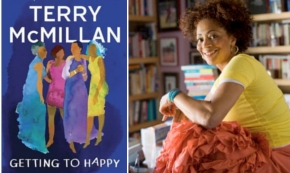
Getting To Happy by Terry McMillan

I wasn’t expecting a sequel to Waiting Exhale. Apparently neither was Terry McMillan. “All four of them got on my last nerve long after their shelf life,” she admits in the Author’s Note.

Getting To Happy is a billboard sign advising middle-aged females to take the next slip road off the love quest

But 15 years after Bernadine, Savannah, Gloria and Robin finally exhaled around that camp-fire, they’re back. Alas, the years have not been kind to them. Their money’s funny, work is unsatisfying and love has made a fool of them all. If Helena Andrews’ Bitch is the New Black suggested black love was tricky in your 20s, Getting To Happy is a billboard sign advising middle-aged females to take the next slip road off the love quest as they’re likely to have more success hunting down the Holy Grail.

The book isn’t a difficult read. McMillan’s energetic, stream-of-consciousness translates into pages that practically turn themselves. But there’s a bitter edge that permeates too much of the novel. If somebody founded an anti-romance movement Getting to Happy would fit like a glove; four women and a string of failed relationships exemplifying the many ways love can end badly.

When I recall how the dreamy optimism of How Stella Got Her Groove Back mirrored McMillan’s personal love life at the time, it’s impossible to separate the anger, regret and disappointment that colour this book from her subsequent divorce. I can only hope that as art is clearly imitating life, Getting to Happy acts as a necessary exorcism and McMillan is able to move on, back to the stories of fortitude and promise we love her for.

The Help by Kathryn Stockett

If you took GCSE English then chances are you’ve read a Mildred D Taylor novel. My sister and I were ahead of the curve. I read everything she read and since our Nigerian parents restricted our movements to school, Safeway and the local library, I’d read everything Taylor had published long before I stepped foot in secondary school.

It was in her books I first heard of segregation. It took me a while to make the connection and understand that parallel to the dirt-poor Waltons who lived on Waltons’ Mountain and whom we watched religiously on a Sunday morning, were black communities languishing under the mass deception of ‘separate but equal.’ Yet while Taylor’s narratives engaged me, it was her authorial voice, the musicality of a unique English dialect that enthralled me. She stood on the shoulders of Zora Neale Hurston and Alice Walker in telling stories in that colourful, metaphorical voice intrinsic to the Deep South.

I hadn’t planned on reviewing The Help for this site. A story about African American maids written by a white woman who’d grown up with a black maid just didn’t seem to fit the criteria. Further, it seemed almost insulting for a white author to ‘decide’ to set aside her privileged skin tone and seek to represent the daily life experiences of women who’d spent their lives under the hard fist of racial discrimination. I’d have the same reservations if an Israeli decided to write from the perspective of a Palestinian or a Saudi man decided he could understand life as a Saudi woman.

I borrowed the book from the library and added it to ‘the pile,’ a tower of books that teeter beside my desk. Time passed. I heard a film adaptation was being made and thought, ‘I should get to that book soon.’ More time passed. And then I read a NY Times article about how the ‘alleged’ inspiration for the book, a maid who worked for the author’s brother’s family was suing Kathryn Stockett (the author). It piqued my interest anew and I thought, ‘I’ll just read the first chapter, I’ll probably hate it and that will be that.’

…Stockett’s ability to untangle the nuance of oppression, then flip the script and speak in the voice of the oppressor, kept me reading…

But I didn’t hate it. Stockett can certainly write. And growing up in Mississippi she captures that same rich, expressive voice I first admired in Mildred D Taylor. It was the voice that kept me going past that first chapter. But it was Stockett’s ability to untangle the nuance of oppression and humiliation, then flip the script and speak in the voice of the oppressor, and humanise them too, that kept me reading the entire thing.

The Plot

It’s the 1960s and Aibileen is a maid and childminder. She’s raising her seventeenth child and dreading that day when her charge realises she’s ‘black’ and therefore inferior. Once this happens she plans to move on. Minny is Sofia from The Colour Purple: large, loud and dangerously outspoken. She is the best cook in her corner of Jackson Mississippi but her defiance has set her at loggerheads with the town’s most powerful woman and something has to give. Skeeter is a white woman; recently returned from college, she’s a writer hungry to make her mark on the world. She doesn’t see anything particularly wrong with the racial set-up in the South but when she decides to write about the lives of Jackson’s black maids she’s forced to open her eyes and really look. The three women cross boundaries and are forced to rely on one another in ways they never would have expected.

What’s great about the book

In a time when black Southerners could be killed for using the wrong bathroom, the risks the maids take to tell their story keeps you on the edge of your seat until the last page.

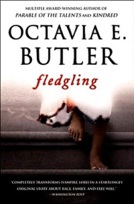
Fledgling by Octavia Butler

If you’re not an ardent science fiction fan you may not have heard of Octavia Butler. Suffice to say she is to sci-fi what Tiger Woods is to golf and Ozwald Boateng to men’s tailoring, an outsider whose talent bought her a ticket to the party then elevated her to VIP status.

In Fledgling Butler’s final novel before her premature death, she works a remarkable transformation on the hackneyed vampire myth.

Society is more likely to accept a vampire in your car than a young girl of a different race.

Her protagonist, Shori is a young black girl who barely escapes a brutal attack on her family. She wakes from a coma to ravenous hunger and a black hole where her memories should be. When Wright Hamlin, a white man, drives by and stops to offer her a lift we quickly discover two things; firstly Shori’s food of choice is blood, secondly society is more likely to accept a vampire in your car than a young girl of a different race.

Wright doesn’t deposit Shori at the hospital as he intended, it seems her saliva contains an enzyme that allows her to bend the will of those she feeds on. Instead he takes her home where the pint-sized vampire regains her memory while they indulge in a Lolita-esque relationship. It’s not long before the quiet idyll of this new home is shattered by another tragedy and it is soon clear that Shori was the target of both attacks and whoever orchestrated them will not stop until she’s dead.

The murder-mystery central plot is compelling and certainly keeps the pages turning, but let’s face it, thanks to Stephanie Meyer and Charlaine Harris we’re all feeling a little drained by the vampire trendwagon.

Her vampires co-exist peacefully alongside humans in matriarchal societies modelled on African village life.

Thankfully, Butler’s world of the undead manages to avoid being tedious or tired, largely due to the rich new mythology she brings to the genre. Her vampires co-exist peacefully alongside humans in matriarchal societies modelled on African village life. Their feeding rituals require blood from several human ‘symbionts,’ human blood-banks with whom they also enjoy sexual relations. It’s an arrangement that could be easily mined for its erotic potential but is instead used cleverly by Butler to provoke the boundaries of our moral comfort zone. Shori it turns out only looks pre-pubescent, she’s actually in her early 50s. Yet, while we’ve become inured to ancient male vampires – cloaked by the appearance of youth – seducing innocent young girls, Butler forces us to confront the reverse, and it’s surprisingly discomforting: “He covered me with his huge, furry blanket of a body. He was so tall that he took care to hold himself on his elbows so that my face was not crushed into his chest.”

The story culminates in a gripping courtroom drama that echoes Arthur Miller’s The Crucible. It’s a conclusion fraught with hairpin twists and a wrenching discussion on the nature of prejudice that churns your emotions like a machine spin cycle.

Butler has delivered a multilayered tale that manages to be both exhilarating and meaningful. If you haven’t read it this novel should go straight to the top of your list.

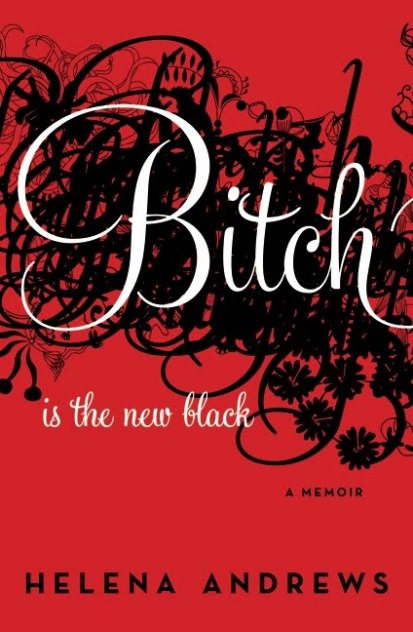
Bitch is the New Black by Helena Andrews

The consequences of spending most of your time idling in the chick lit section of bookshops become apparent when you’re occasionally required to read something serious or based on real-life events. You find you’re primed to look out for the happy ending, that stories feel…incomplete without one. Thus I came to the end of Helena Andrews’ Bitch Is The New Black feeling a little short-changed – What? She doesn’t find a guy? What kind of story is this?

But then maybe I should have paid more attention to the pundits who described the memoir as the ‘black Sex in the City,’ since being a black girl and living in the city, I happen to know there’s little sex but a great deal of cooling your heels with your girlfriends trying to conjure suitable men from the ether.

Andrews sets out the uninspiring state of her love life in chapter one, Dirty Astronaut Diapers. The cryptic title refers to Lisa Nowak, a successful astronaut who upon discovering her man is cheating, google-maps the location of her competition, wraps an adult nappy around her business end (to avoid the need for bathroom breaks), packs her car with a steel mallet, four-inch knife and a pellet gun and sets off for her rival’s home.

In 2007 Andrews and her best friend Gia found themselves hooked by the Nowak saga: “A diapered astronaut became our muse – the awesome crazy we measured our own bizarre love lives against.”

They were amused by Nowak’s insistence that she had simply wanted to ‘talk’, captivated by the lengths this well educated woman had been willing to travel to keep her man, but mostly struck by how desperation sneaks up on you, how aged 27 and still single, desperation was creeping up on them: “Crazy astronaut ladies and fabulous twenty-something black chicks are in the same spaceship,” Andrews writes, “they’re aliens among men blasting off to who knows where.”

It is also in 2007 that Andrews falls for Dexter, a man who dates her for six months before realising he likes her as ‘more than a friend but less than a girlfriend’, and is then surprised by her unwillingness to pursue their relationship. Months after their break up he instant messages her with the vague offering, ‘you win’. What could I possibly have won, Andrews asks herself: “In the history of the world, black women have won approximately three things – freedom, a hot comb and Robin Thicke”. And so she stands her ground, revels in being “the baddest bitch on the planet”. But, like a generation of black women who, through education and hard work, have propelled themselves up the ladder of western society only to find themselves alone, she is left wondering if she’s set the bar too high: “What about later? If I lose this round will there ever be another?”

The book isn’t all relationship drama. Andrews’ upbringing by a nomadic, lesbian mother makes for an interesting childhood. While shifting wildly around the country she longs for a family like that depicted on The Cosby Show: “In the Huxtables I found a family so different from mine. They were huge and permanent. The Andrews were just two and in constant motion like a tongue.”

Andrews’ creative use of chronology and witty turn of phrase make her memoir a thoroughly engaging read. Yes it took me longer than usual to work my way from cover to cover, but that’s down to personal taste i.e. my interest tends to drop markedly once I confirm a book has no romantic subplot. Don’t worry; I’m on a 12-step program to address this issue.

Regardless, Andrews presents a persona every woman who’s ever strived can relate to. I laughed heartily at A Bridge To Nowhere where she describes her first assistant job: “We traded in the four elite years we’d spent as somebody for the chance to say we worked for a somebody.” Who didn’t emerge triumphantly from university only to find the ‘starting position’ in a company left most of their brain cells surplus? “We triple-fact-checked fax cover sheets and examined emails as if they were trace evidence against us.”

I empathised when a coveted job at the Washington Post brings its own trauma: “There’s something terribly frightening about being the only black person at a political newspaper when there’s a black guy running for president.” Then cheered as Andrews works the opportunity to her benefit.

Yet it is her quest for a good man that drives the narrative and makes Andrews the black girl next door. She shares the adventures of her dogged search frankly; tales of leaping hopefully from party to party, swaddled in spax, when the Congressional Black Caucus come to town – “The CBC is to single-black-chick Washington as Fleet Week is to single-white-gal New York”. She makes it seem proactive to fly out of state for a conference organised on Facebook for “uppity black people to discuss dating, relationships, sex and whatever else is on the mind”. And admits to hours spent perusing national statistics online, stats that don’t portend future marital bliss for her: “it’s our stats versus the rest of the country’s, and there’s no time to go to the cards for a decision. It’s over. Technical knockout. While our women were snatching up college degrees and busting up glass ceilings, our men were getting snatched up and busted.”

Her efforts are not met with success, but it’s not as depressing as it might sound thanks to Andrews’ wry sense of humour. She loves and loses but remains ever optimistic that her Obama will one day appear. She is the 21st century black woman, multi-faceted and bitchy only when necessary. Her story is definitely worth the read.
My Bollywood Wedding by Rekha Waheed

I settled down to read this novel on a three-hour train journey from Marrakech to Casablanca. As a huge fan of fluffy, romantic novels I’d been hoarding it like a birthday party bag since discovering it in a London bookshop. After a few miles of unremarkable Moroccan farmland it seemed like the ideal time to dive in.

So, the disappointment was that much keener when it turned out to be…not particularly good.

Maya, a thirty-year-old Bengali Brit has proposed to her best friend Jhanghir. With a penchant for the dramatic, Maya hasn’t just pulled him aside one day and confessed her undying love, she’s flown across the Atlantic (he lives in New York), derailed his engagement to a family friend and proposed to him on stage at an awards ceremony in front of family and friends.

It’s hard to root for a relationship based more on desperation than emotion.

Wow, she must really love him, you assume. Hmmm, not so much it turns out as Maya’s overriding concern is not love but her fear of ending up a SLAAG (single, lonely, ageing Asian girl). It’s hard to root for a relationship based more on desperation than emotion. Why Jhanghir agreed to the marriage is never clear; was it pity? Surprise? It’s hard to believe it was love as Jhanghir casually allows his uber-wealthy family to treat his fiancé like a gold-digger.

By Casablanca I’d frowned and rolled my eyes so hard I feared they’d never come back down. On the return journey to Marrakech I speed read through the rest of the book determined to know how the convoluted plot would be resolved. Red herrings, sloppy mis-direction, a whiny annoying heroine… the book only clings to the cliff-edge of bearable thanks to competent writing and its intriguing insight into another culture.

The happy-ever-after resolution reads like a literary band-aid slapped on a gaping wound of a plot. I hope the happy couple know a good divorce lawyer.